Peter Elias, February 2026
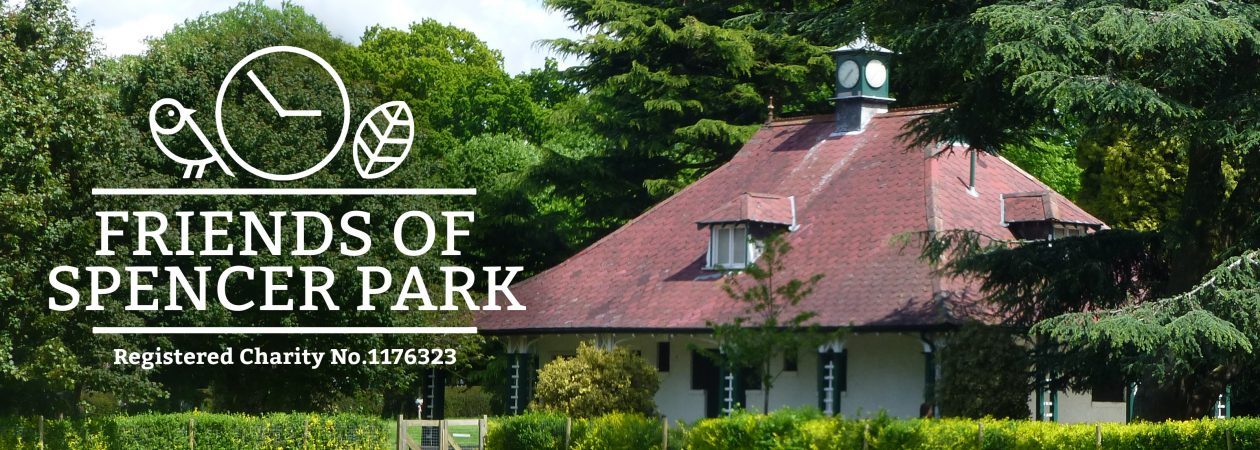
With the community café up and running in the restored changing pavilion in the centre of Spencer Park, Coventry, I have been asked a few times ‘How did you do it?’ We also sometimes ask ourselves the same question, given the numerous obstacles that the Friends of Spencer Park (FoSP) had to overcome to provide park users with such a lovely café, and space for community groups to meet.
The work continues, but we have now reached a point where we can stand back, take a breather, and describe what we have done so far and how we did it. To do this requires a bit of background into the situation that arose as the council started to withdraw funding for staffing and maintaining the pavilion. It’s a long read but bear with me and you will find it a warming story about the strength of our local community, and the power we have when working towards a common goal. It might also be of interest to other community groups seeking to take on responsibility for previously publicly funded assets.
Background
In 2011, Coventry City Council started to report on the scale and impact of the cuts that central government had introduced in 2010, leading to what were termed the austerity years. By 2014, the council had already lost £45 million from its core government support, representing a 20% reduction in central government funding in just three years. With rising demand for elderly care and children’s services, something had to give. As a direct result, the budget for staffing and maintaining all the parks in Coventry was cut drastically. In Spencer Park, the changing pavilion, which had opened in 1915, was closed permanently in 2015, also leading to the closure of the tennis courts and the flat bowling green given the lack of staff to deal with bookings and racket hire. The council managed to keep the lawns and hedges trimmed, but it looked like the beginning of the end for the pavilion.
By a stroke of good luck, the North Earlsdon Neighbourhood Association (NENA) had been formed in 2009, actively recruiting local residents to help with its work in improving the neighbourhood. Spencer Park sits on the edge of the area covered by this neighbourhood association and had already formed what was termed ‘The Spencer Park Group’ to focus specifically on the future of the park. In December 2012, NENA published a draft report, titled Safeguarding the Future of Spencer Park, reporting on a quick survey it had run to find out what improvements park users wanted to see. This led in turn to the notion of a grand ‘Park Restoration Project’, including a scoping and design project to explore options for new play equipment and researching the potential for restoration of the pavilion. Ideas were discussed for a major project bid to restore the park, similar to that which the War Memorial Park had developed around the same time.
By putting pressure on the council, the Spencer Park Group persuaded the council to carry out some much needed but temporary repairs to the pavilion in Spring 2011. However, the work of the group had to focus on more immediate issues, like keeping the paths and garden areas in the park weed free. Nonetheless, the idea of a restored pavilion to create a community space and a café had been born. What was lacking was the expertise to carry out such an ambitious plan.
In its early years, the Spencer Park Group had a small but active membership of local residents. Chaired by Paul Smith, its membership included Karen Berry, Bill Malley, Zilpha Reed, Tim Brooke, Helen Elias, Esther Higden, and Kevin Noble. The group recruited volunteers who, under Zilpha’s scrutiny, focussed on the immediate task of restoring flower beds, planting shrubs, and weeding the paths in the park, all of which needed attention. A good working relationship with the council was maintained, with council employees Dave Lewis and Ann Akerman often in attendance. The link to the council soon proved useful, as information was provided about the council providing possible matching funds for playground equipment, but who would provide the matching funds given that most funding bodies required that the organisation to which they were providing funds should have charitable status? Tim Brooke stepped in, using the experience he has in this area to draw up a constitution for the Spencer Park Group and registering it as a Charitable Incorporated Organisation with the Charity Commission in December 2017. In so doing, the Spencer Park Group became a separate entity from NENA and named itself ‘The Friends of Spencer Park’ (FoSP). Fund raising then got off to a good start, with a successful bid to a landfill organisation to match the council funds for playground equipment, closely followed by funds to create a children’s cycle track on one of the unused tennis courts.
Restoring the pavilion
So, by 2016, the stage was set to consider what to do with the pavilion. Minutes of the meetings of the FoSP committee, now chaired by Paul Smith, often recorded discussion about what to do with the pavilion, but the expertise required to mount such a big project was not in place. Besides, there were plenty of other issues to resolve. Proposals were being discussed with the council to see if a ‘pop-up’ café could be created in the pavilion, serving drinks and snacks for consumption outside the building. I was brought in to help to set up a booking system for the reopened tennis courts. Karen Berry and I approached the Lawn Tennis Association (LTA) to find out if we could use their much superior booking system by registering the tennis courts with the LTA, a move that would later prove to be highly beneficial for the upkeep and maintenance of the tennis courts. Ken Taylor and Carol Bayliss joined the committee. Helen Elias continued raising funds, providing new park benches both in the small park next to Dalton Road and on the larger recreation ground.
Some readers of this account may recall that around 2017/2018, Paul Smith would often be seen in the park talking to park visitors, finding out where they lived and what jobs they held. Slowly but surely, he was recruiting the expertise needed to form a sub-committee of the FoSP, tasked to address the pavilion issue. As a senior university researcher, I was persuaded, first by my wife and then by Paul, to bring some fundraising expertise to the Friends of Spencer Park. But we also needed an interior designer, someone with legal expertise, a structural engineer, an administrator who would help within the huge amount of paperwork, catering expertise, and someone with project management experience. This was how it was that a small but well-crafted sub-committee came into existence. Chaired by Paul, it consisted of me, Richard Jones (Course Director, BA Hons Interior Architecture, Coventry University), Tim Brooke (Founder and Trustee of Emmaus, Coventry and Warwickshire), Aaron Dennis (Catering Manager at Warwick University), Ignacio Escobar (Chartered Engineer), Nigel Johnston (Programme Manager, West Midlands Police), Stephen Round (senior solicitor), and Helen Spence (retired maths teacher) – with Helen Spence providing the essential administrative support. Paul’s meeting with Richard was particularly fortuitous – with Richard’s Coventry University students working to produce drawings illustrating what the interior of the pavilion would look like if converted into a café and community space.
My first task was to assist with the analysis of a park-user survey, conducted in 2018. Results from this survey supported what we already knew – that park users valued the pavilion as the centre piece of the park but wanted to see it restored to provide a café, and a community space. Jane Donovan set about working to open a pop-up café staffed by volunteers, serving take-away drinks and snacks to park users at weekends. We undertook an audit of the skills of all our committee members, given that a few more people had joined the FoSP, and we needed to know who had experience that would help with our plans for the pavilion and for the park maintenance more generally. Helen Spence created the online document store that we would need to manage and curate the huge amount of documentation we knew we would be creating. We all helped with a second, wider survey of people who may or may not be park visitors, trying to find out more about the potential appetite in the wider community for developing the park’s facilities. All these activities indicated that we should press on with a project to revitalise the pavilion.
By February 2021, the pavilion sub-committee produced its strategic plan for the pavilion. It outlined our goals and set out how we might achieve them. This was closely followed with a clarification of the governance arrangements given that by now 15 people were involved in different aspects of our efforts to maintain and improve the park. The plans that Richard Jones and some of his students had created for the redesign of the interior of the building showed it as a two-floor plan, with the attic-shaped upper floor space providing a gallery for local artists and other groups to use. Ignacio calculated the size and nature of the steel supports needed for the two-floor design. Tim and Ken discovered that the council could provide a bursary to help with the initial costs of taking our ideas to the point where they could inform a realistic bid for funds. Nigel drafted a business plan, looking closely into the case for a café that would fund the cost of running a restored pavilion. In September 2021, Paul stepped down as Chair of the pavilion sub-committee, though remained on this committee as a valuable member, and I was proposed as its new Chair.
The council bursary enabled us to commission outside expertise for a study of the feasibility of our ideas and plans. Were they realistic? Would the business plan withstand scrutiny? Could we manage the restored pavilion as a going concern and was it sustainable in the long term? We invited five different organisations to bid for a feasibility study, finally selecting Robert Dale from the Daniel Connal Partnership, a Norwich-based consultancy, to undertake the study, given his experience and qualification for the task. Robert Dale spent a month reviewing all the documentation we had prepared, visited the site and interviewed committee members. His report was positive, with one important proviso – the proposed upper floor in our plan was deemed to be too costly for the extra space it afforded, and it should be removed. Richard revised his plan accordingly.
Our next step was to obtain a detailed cost estimate for the internal reconstruction of the pavilion. Again, competitive tendering led to us appointing Bhangals Construction, a quantity-surveying organisation, to review and estimate the costs of every aspect of the work. Their report indicated that we would need to raise £320,000 to implement the revised design that Richard had provided.
Bidding for funds
Despite the difficulties of maintaining momentum with the project during the Covid outbreak, we would soon be ready to make our first major funding bid. However, two tough obstacles had to be overcome. The first was the fact that asbestos had been detected in the roof space of the pavilion. Quite what this meant we had little idea. Fortunately, Paul had been aware of this problem for a while and had negotiated with the council for them to pay for a specialist organisation to undertake an asbestos survey. This meant that we could provide any prospective contractor with details of the difficulties they might be facing when working in the roof space. The second obstacle proved to be a little more difficult and expensive to resolve.
Most funding organisations require that the body to which they are providing funds should either own or lease the building they plan to improve. To overcome this as a potential obstacle, we began negotiations with the council to lease the pavilion. Stephen Round recommended that we engage Rajinder Bhangal, a solicitor employed with Anthony Collins Solicitors, to act for the FoSP in negotiating the lease of the pavilion from the council; given that Raj was local and her firm specialises in the transfer of ownership and leasing of public buildings. The development of the lease was complex, because the FoSP did not want to be in a position where they had leased the pavilion, taking on responsibility for its upkeep and maintenance, without first having secured funds for the refurbishment. This required not simply a lease, but also an Agreement for Lease, setting out the conditions under which the lease would be activated. Thanks to the work done by Raj on behalf of the FoSP, and her counterparts within the council, this was all successfully concluded by 16 August 2022. When activated under the terms of the Agreement for Lease, this would confer a lease from the council to the FoSP for the next 99 years – all for a peppercorn rent. Now all was ready for the FoSP to start making applications for funding.
Tim Brooke had wise words to offer at this stage. His experience told him that it was likely that we would have to create a jigsaw approach to funding, in that most funders relied on the fact that they would not be the sole funder, often requiring those seeking large awards to find several sponsors. Additionally, there was the ‘who goes first’ problem, in that a funding organisation would be happier to provide funds if it saw that another funder had already done so. However, an opportunity arose that meant we might abandon such an approach.
In 2022 the UK government launched the Community Ownership Fund (COF). Applicants could apply for funds for local community group with charitable status for up to 50% of the monies they needed to acquire and operate buildings previously owned by a public sector organisation. The timing of this announcement and the nature of the fund was a perfect fit for our project. There was one important caveat – we did not have another sponsor that had agreed to fund the matching 50% required under the application rules. Quickly, we looked around and identified a potential source – the 29th May 1961 Charitable Trust made awards to charities in the West Midlands. I was aware of this somewhat obscure source of funding, given that the fund had made numerous awards to the University of Warwick to construct student residences and to support the Warwick Arts Centre. The Community Ownership Fund (COF) would allow applications if you stated who else you had applied to for the 50% they would not be covering, even if a decision on the matching was still in the pipeline.
And so it was that an application to the COF for £160,000 was made, together with a bid to the 29th May 1961 Charitable Trust for the same amount. However, the bid to 29th May 1961 Charitable Trust was rejected as being too high. We then waited to hear from the COF. We heard the result late in 2022 and we found out that we had failed. This looked like the whole venture was doomed.
Recovering from a setback
As the saying goes, every cloud has a silver lining, and for us it existed in the letter from the COF that had announced our failure to gain funds. They told us ‘You have not demonstrated sufficiently that you have engaged with the public and have not evidenced their wholehearted support for what you are trying to achieve’. Although we had indicated that the survey work we had done showed support, this was not viewed as a strong enough argument given that surveys are often unreliable. As a statistician myself, I could not argue against this proposition. The silver lining was that we could reapply if we could resolve this problem. Now the challenge was on. We needed to show public support for the project and to do so quickly before the time limited offer to reapply for funding expired.
What happened next was remarkable. We set up a page on a website that asked the public to express their support for our project. The message was simple: ‘Save the Pavilion’ was the key phrase, inviting people to add their names and postcodes and, if they wished, to say why they were supporting us. We were desperate at this stage to salvage our failed bid, and I had little faith in this approach. We drafted the webpage, outlining our need for public support and pressed ‘click’. In a very short space of time, 2,689 signatures were logged, the majority from postcode addresses around the park. None of us could believe what we were seeing, with many signatories stating how important what we were doing was to the local community.
We decided at this point to hold what is often termed a ‘town hall meeting’ – essentially a meeting open to the public where we could elaborate our plans and invite comments and criticisms from attendees. The Methodist Church in Earlsdon was the obvious venue, and on a cold and wet evening in March 2023 we all turned up at the Methodist Church to present our plans, thinking that few would brave the dreadful weather just to hear us talking about a plan that might never happen. Again, we were wrong. Over a hundred local people turned up to listen to us and comment on the plan, some with quite strong views about the design. ‘Make it look inside like it belongs to the time when it was built’ was a comment that struck me and which translated into what we would subsequently do – but this is getting ahead. We still did not have funding. Perhaps those people adjudicating bids for the COF might not regard the meeting and the web petition as adequate. That got us thinking, what would happen if we put a crowd funding appeal on the web? So, we did and in a short space of time we raised over £6,000 – some quite big donations and others saying, ‘Keep on going and here’s a fiver’. This was heart-warming stuff.
We crafted a public engagement report on the back of these activities and results, including a lot of local statistical information from the 2021 census about the nature and the diversity of our local community, and submitted a new bid. Would we fail again? Of course not – £182,000 was now on offer from the Community Ownership Fund, £155,000 of which was for the capital spend. Time to rejoice, but it was a short-lived celebration. The COF award would not be released until we had secured the other 50%. We were keen to start spending by engaging people with the professional expertise to take our project forward, but we had to release the money from the COF to do so. Then, it occurred to us. On reading the COF rules about matched funding, this could be in cash or in kind, as long as ‘in kind’ contributions could be valued independently. The council had leased the pavilion to us at a peppercorn rent, but what if they had leased it to a commercial bidder instead? In other words, what was the value of the lease that the council had given us? To find out, we engaged a professional valuation agent, qualified by the Royal Institute of Chartered Surveyors and commissioned an independent valuation of the lease. The answer came back quickly; it was worth at least £160,000! Suddenly, we were aware of the generosity of the council, and this was enough to release the COF award. Now we could move on with the project while still submitting further bids for funding. As Tim had advised us a year earlier, this would open up the way for a number of significant, but smaller awards from funders. Funding awards from other sponsors then came in thick and fast. Despite having rejected our earlier, larger bid for funds, The 29th May 1961 Charitable Fund sent us a cheque for £25,000, Garfield Weston added another £20,000. Coventry City Council paid in £15,000 on top of everything else they had provided. nPower awarded £20,000 to equip the café and the kitchen with furnishings and equipment. This was all valuable progress, but we were now chasing a moving target, which is the next part of the story.
The challenge of rising costs
Any major project like ours, which involves an historic building, needs very careful management to ensure that the heritage of the building is preserved. This was also a condition of our lease from the City Council. We needed to employ a contractor who would be sympathetic to this need, and with a good track record of work on building conservation. Most of all, we needed a conservation architect who would undertake the tendering for, and selection of, a contractor who met this requirement. We drafted a specification for a conservation architect and sent invitations to bid for this post to two local conservation architects, both of whom had a good reputation with the City Council for their work on local buildings. Two excellent bids came back, and the decision finally came down to price alone. Robert Davies Architects would now select the contractor and manage the project in accordance with Royal Institute of British Architect procedures. Robert, and his colleague Minja, constructed a detailed specification and sent this to five potential contractors who they knew had a good record for this type of work. Some declined to bid, and those that did all came in at around the same price – close to £1 million!
Some parts of our project had to be abandoned due to the huge increase in costs compared with the estimate we had had two years earlier from Bhangals. The most obvious choice was to remove the replacement of the roof from the project specification. This had always proved expensive and troublesome given its unique shape and the custom-made tiles, which were no longer in production. Roof repairs would be done, but complete replacement was now a non-starter. Other changes were made to Richard’s single floor plan, all with the aim of cutting costs. Midland Conservation Ltd. were finally selected via a competitive bidding process, primarily because they were willing to be flexible as the available funds for the work were now a bit of an unknown.
Returning to our efforts to secure further funding, we gained planning permission from the council in December 2023. This was another important step because applications for large amounts of funding to refurbish buildings required that planning permission should be in place. Subsequently, two further applications were submitted. A previous unsuccessful bid to the National Lottery Community Fund was revamped, at a lower price of £80,000, and met with success. Veolia, a landfill organisation, generously contributed £75,000, on the condition that we paid them £7,500. Very strange – but they had good reason, even if it mystified us somewhat.
More smaller awards have been made, sometimes with unexpected results. We made an application to the Edward Cadbury Charitable Trust but were told that the trust had received many applications and they could not consider ours. Many months later, a brief email asked if we still had need of funds, so I replied positively having no idea what was available, then £3,000 appeared in the FoSP bank account. Other unexpected contributions arrived, notably a very generous award from the Earlsdon Festival Committee. Over a year ago, we made an application for a large grant from the Severn Trent Community Fund that was unsuccessful, so we reapplied, this time making sure that it would be a project that might attract funding from an organisation responsible for water and waste treatment. The pavilion has a large roof area, so we applied for a rainwater catchment system to provide rainwater to flush the toilets, including funds for further roof repairs. This was successful and work to install the system will commence in the Spring of 2026.
The Friends of Spencer Park have also dipped into their reserves, allowing us to install the electrically operated security shutters. This contribution, together with all the other awards, means that we have now raised over £0.5 million. But we must continue to consider making future applications for funding.
I have no doubt that the community café will be a great hit with the park users and will generate a surplus. However, we now have to pay for the utilities, insurance, business rates, etc. so any surplus the café generates will go towards these bills and, importantly, allow us to offer use of the space inside the building to community groups, children’s parties, etc. at low cost.
What have we learnt?
I am sure that all the Friends of Spencer Park will agree with me if I say that the most important thing we have learnt on this journey is that having a common goal, and all working together to reach that goal, has been a positive experience that contributed to our success. By identifying who was best placed to carry out different aspects of the work we had to do, everyone had their part to play. Personally, I can say that I have been proud to play a small part in this remarkable team effort.
What will happen next?
As mentioned earlier, the Severn Trent award will allow us to install a rainwater recycling system for the toilets at the pavilion. The award also allows us to carry out further repairs to the roof. This work will be carried out in the Spring of 2026. The clock tower on top of the pavilion needs to be restored, and funds will be raised to achieve this. Further interior decorating will be done, and a 3-phase electricity supply and Wi-Fi will meet future power demands and provide visitors with good internet access. For the next few months Jane and her team of volunteers will become accustomed to their roles in operating the café. A booking system will be set up to enable community groups to book space for meetings, etc. at times when the café is not operating.
If you haven’t yet visited the café, please do so and let us know what you think. After all, this is your café.